On Assignment: Photographing Catalonia’s Wildfire Response
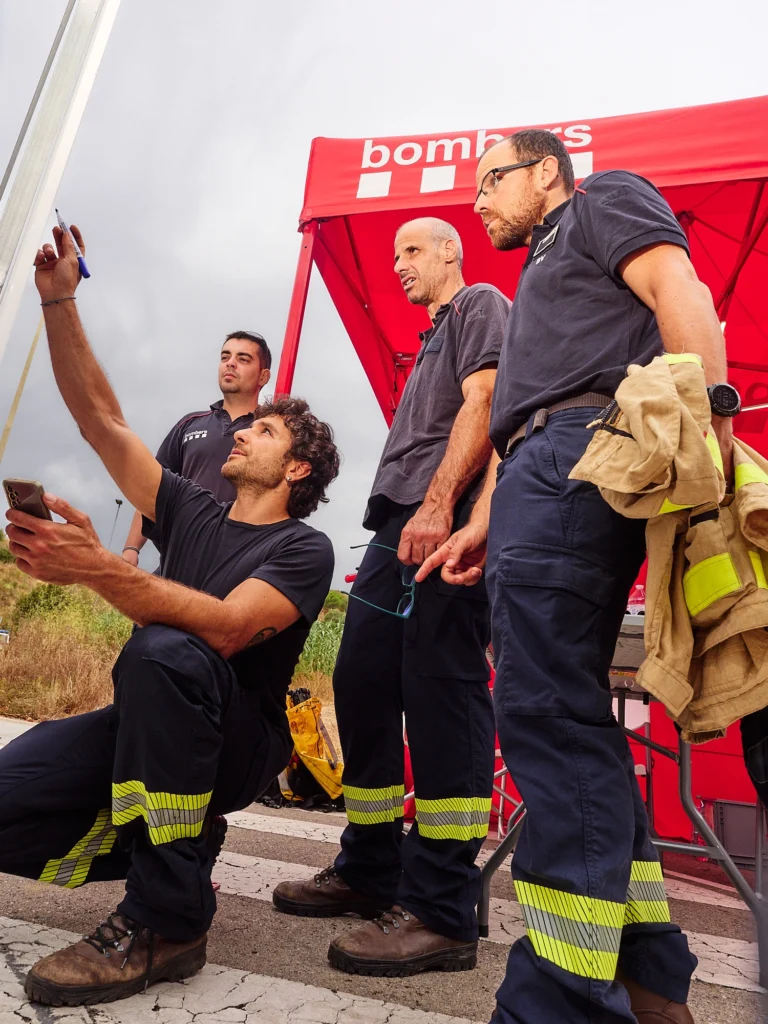
Most of my recent editorial work for The Times has, inevitably, been football. Barcelona provides plenty of opportunities for that, but it was refreshing to be given a very different kind of assignment: photographing the recent wildfires around Barcelona and Catalonia.
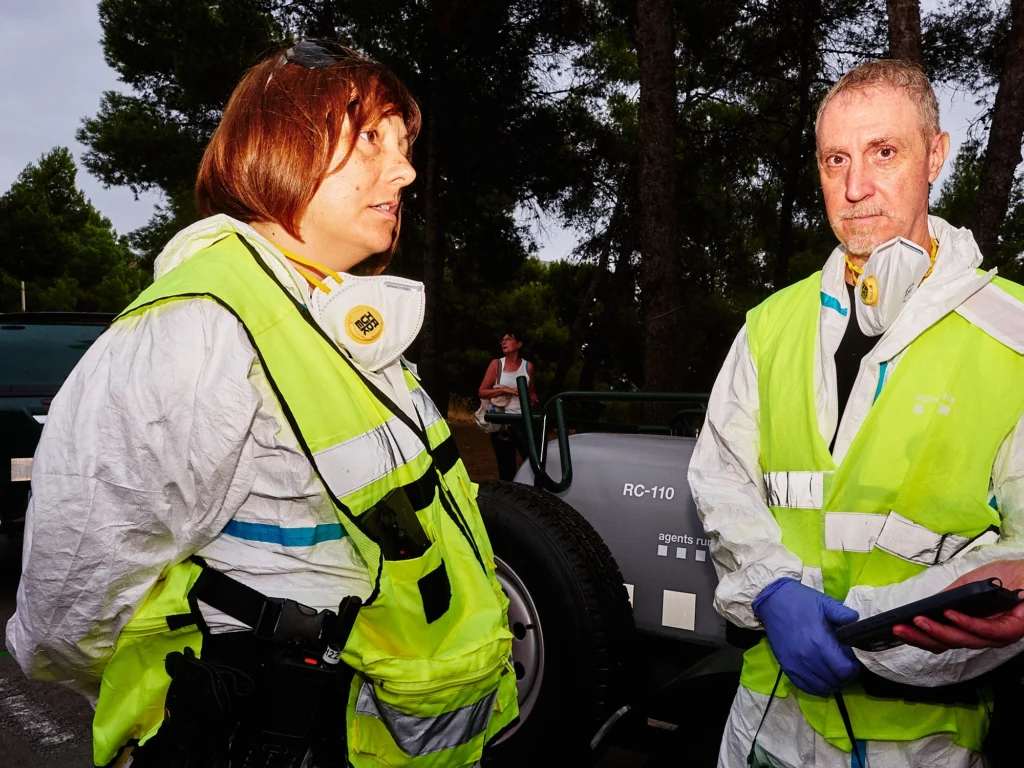
It was a chance to work on a proper developing news story rather than simply turning up to photograph a footballer, and it involved both the aftermath of a fire and the people responsible for monitoring and responding to the growing wildfire threat in the region.
A Last-Minute Editorial Assignment
As is often the case with newspaper photography, the assignment came together at fairly short notice. The original plan was to meet the journalist at a wildfire control centre, photograph an interview and get some images connected with the ongoing response.
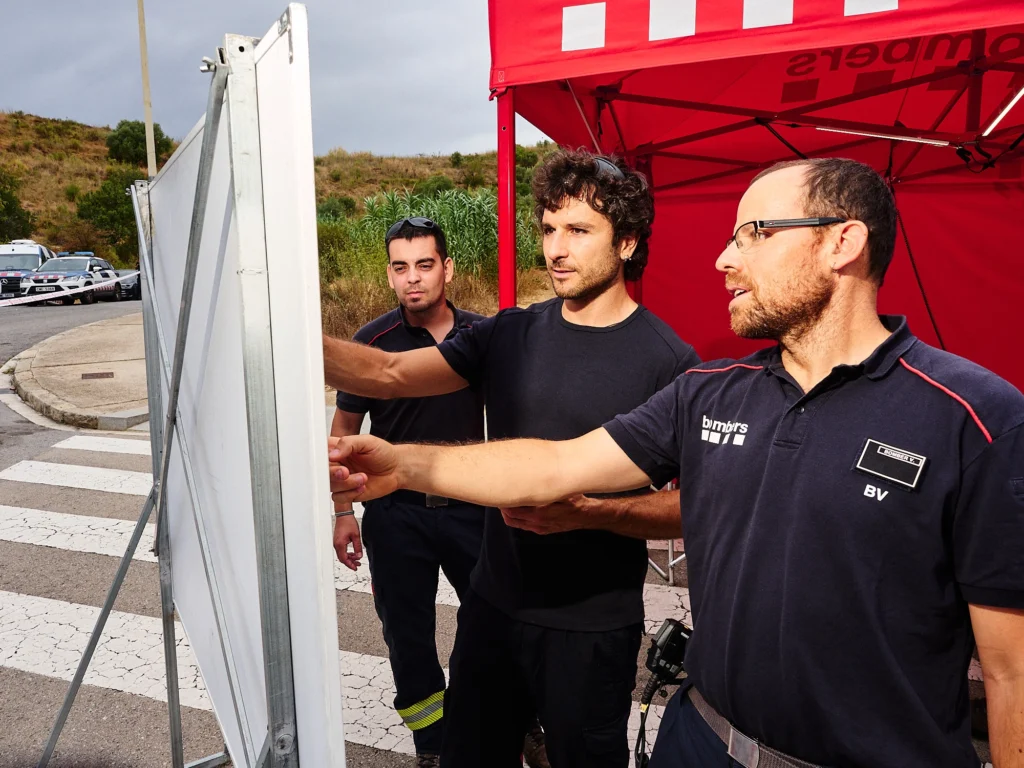
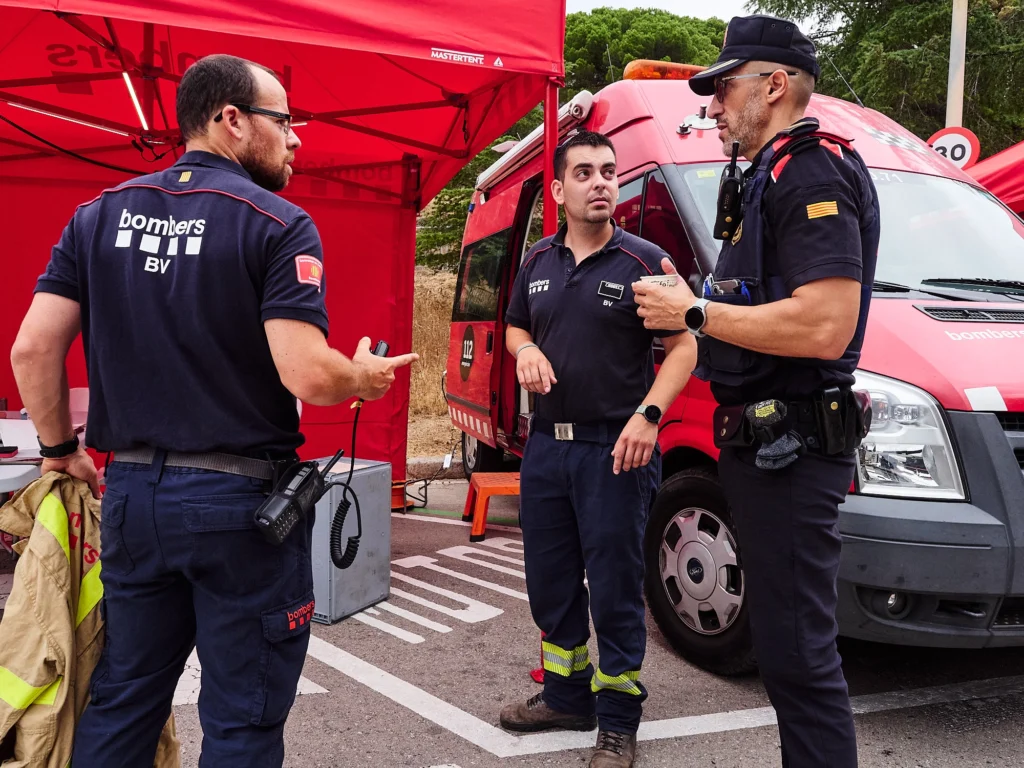
When the person we were due to interview became unavailable, the plan changed. We headed instead towards one of the operational areas close to the site of a recent and substantial wildfire on the outskirts of Barcelona.
We were able to speak to people involved in the response, although the interview we had originally hoped for didn’t happen. I did, however, get the opportunity to photograph the landscape affected by the fire.
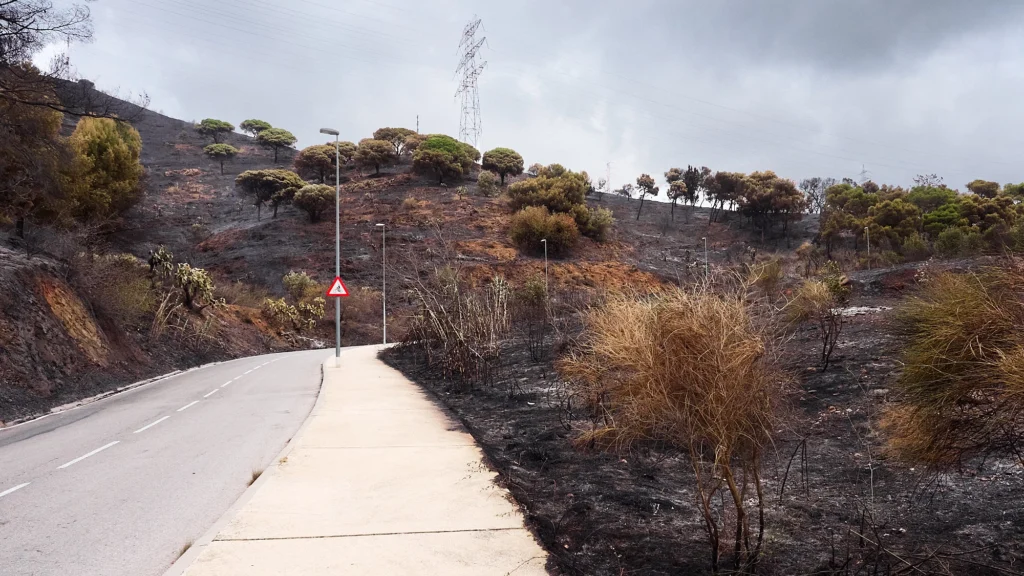
Away from the main roads and police barricades, I found a dirt track leading towards an area of scorched vegetation. The landscape had a very different character from the more accessible views around the perimeter of the fire. Blackened ground, burnt vegetation and the surrounding countryside provided some interesting photographs showing the aftermath of the wildfire.
Photographing at the Parc de Bombers de Cerdanyola del Vallès
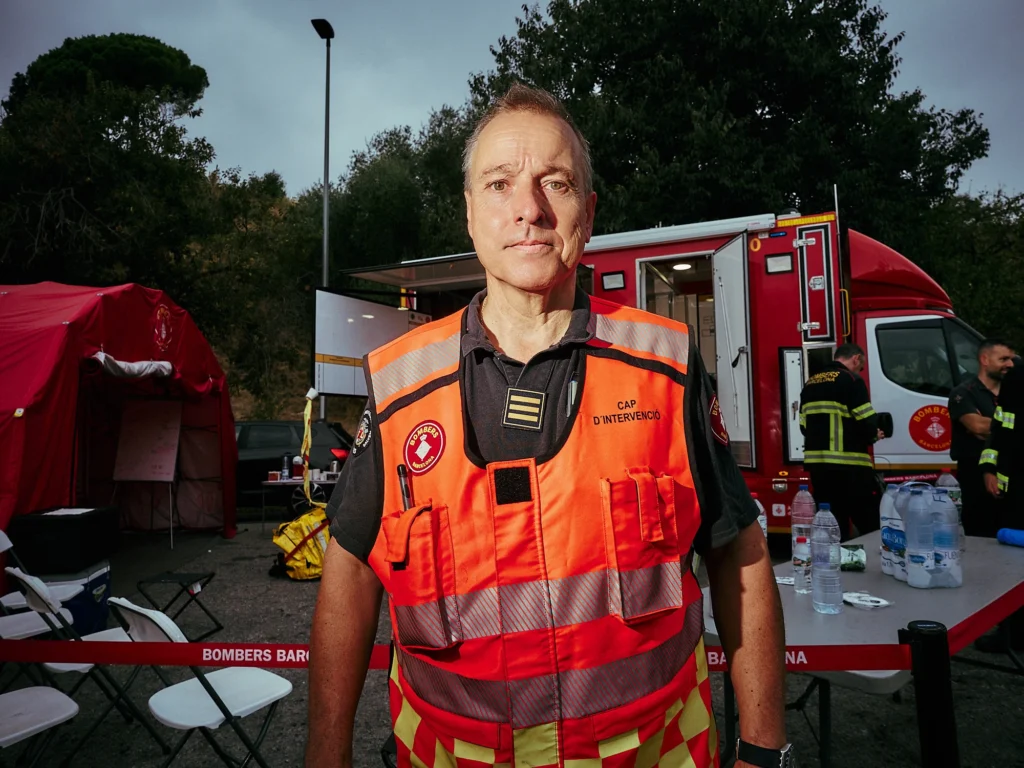
Later that evening I received another call: the interview was back on, this time at the Parc de Bombers de Cerdanyola del Vallès. So I set off again and met Marc, who was to be interviewed about the increasing wildfire threat in Catalonia and across Spain.
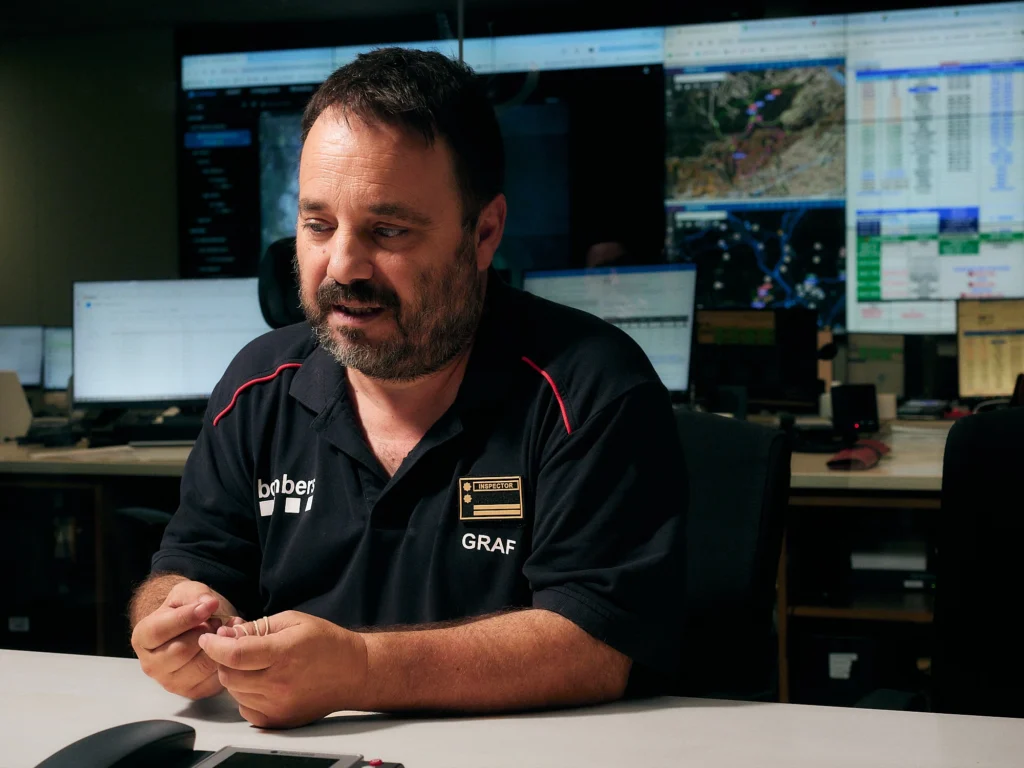
The portrait presented a completely different set of photographic problems. I photographed Marc sitting inside a glass booth, with the control centre and its equipment visible behind him. Working through glass meant dealing with reflections from both myself and the surrounding environment, while still trying to retain enough of the operational setting in the background to establish the context.
I ended up choosing a frame where Mark isn’t looking directly at the camera. It isn’t necessarily the conventional approach to an editorial portrait, but I preferred the mood of the photograph.
He also had a rubber band wrapped around one finger, which he explained was his equivalent of a worry bead — something he uses when under pressure. It was a small, personal detail that seemed to say something about the person behind the official role.
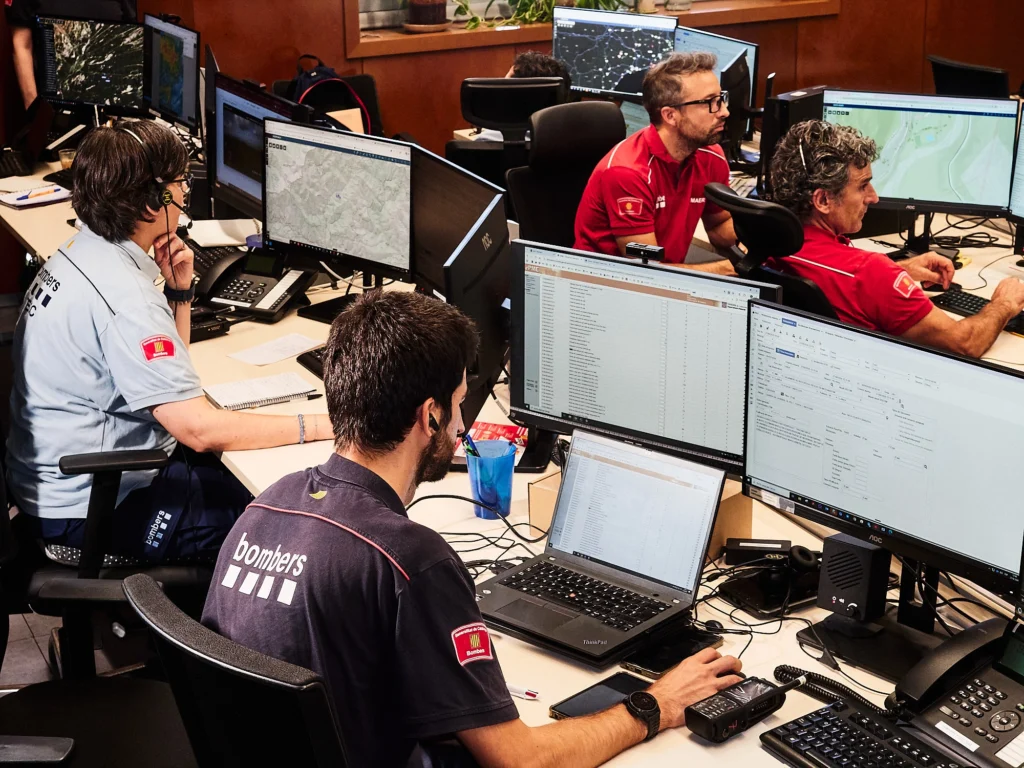
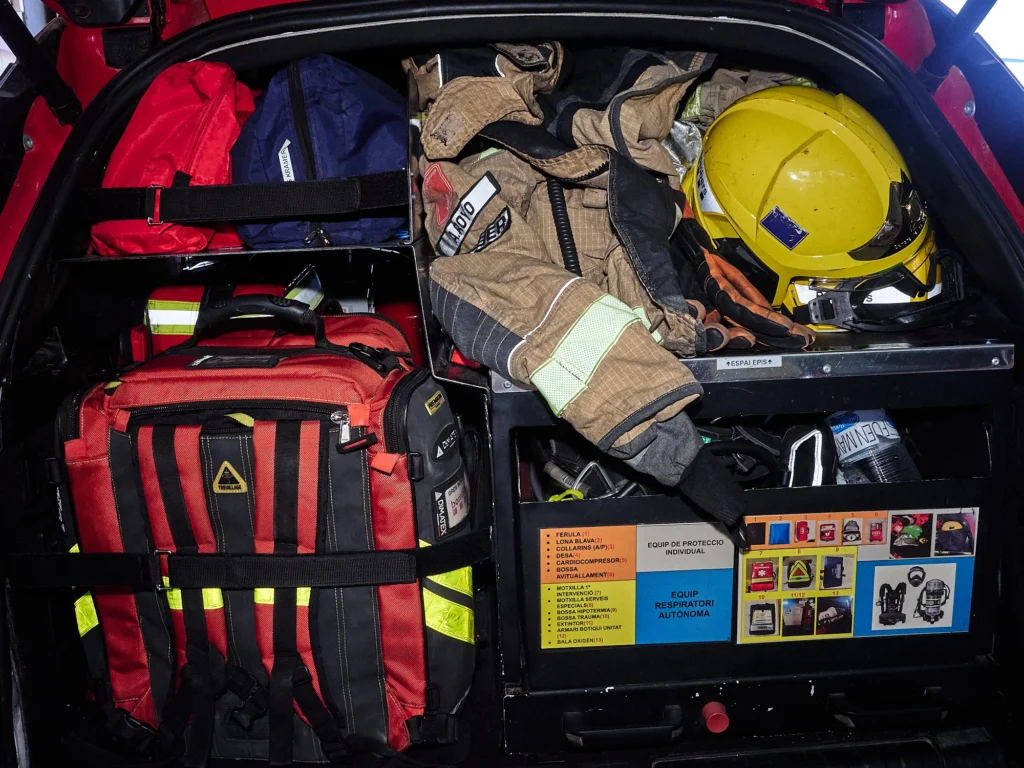
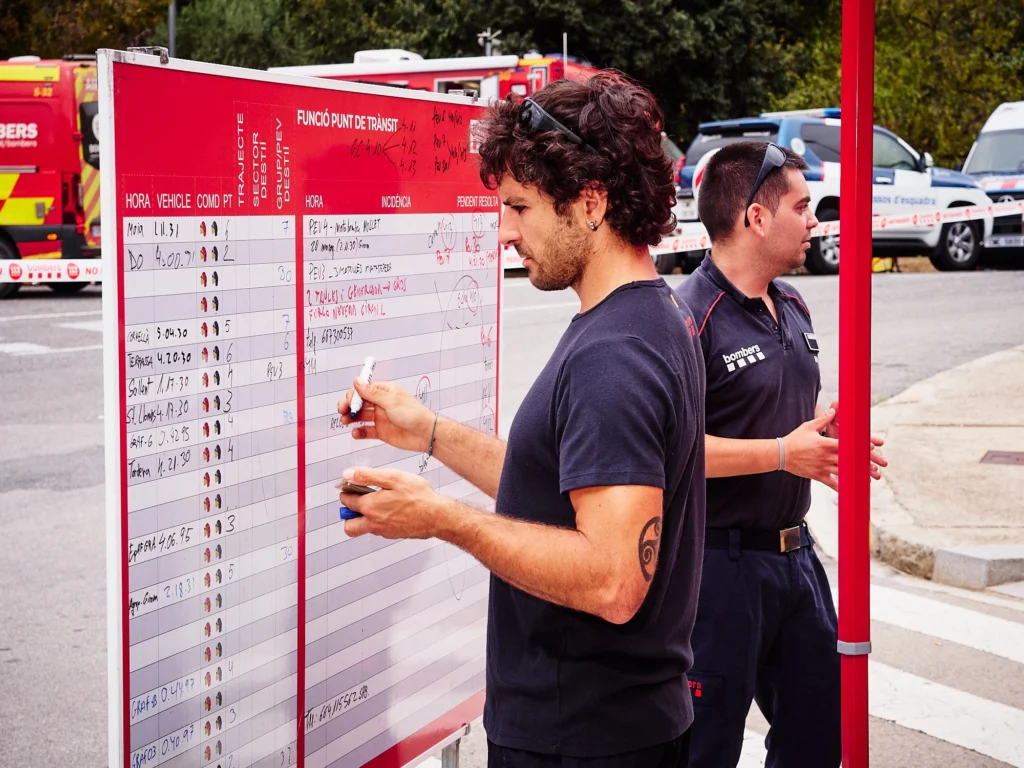
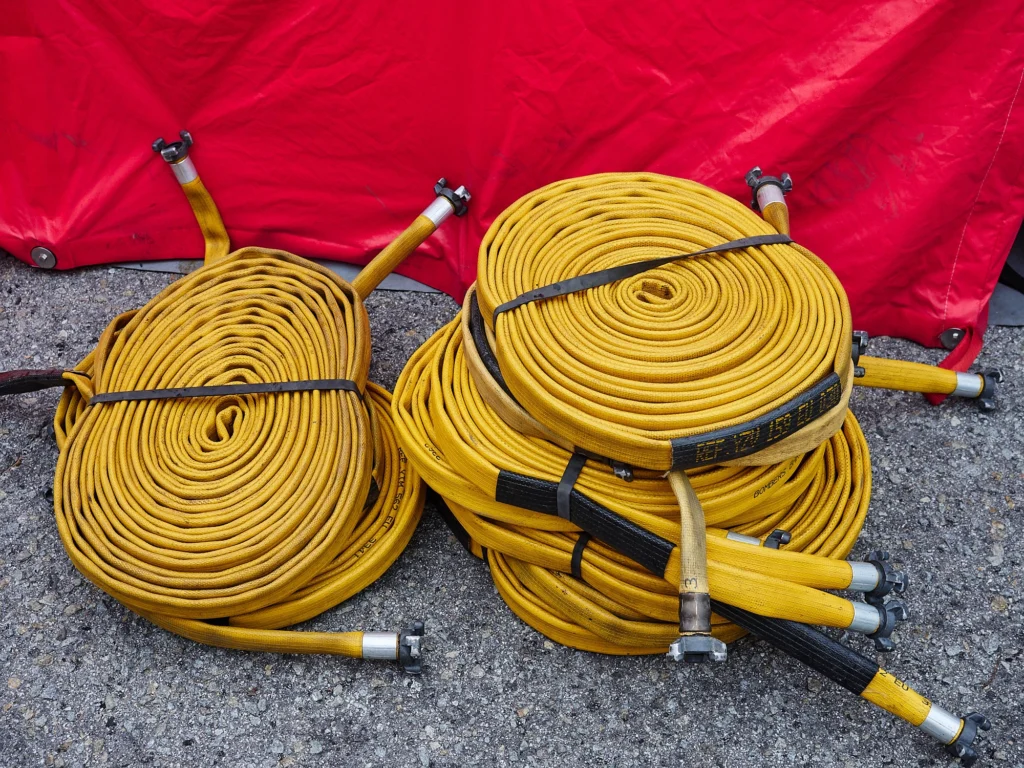
After the portrait, I photographed the control room and some of the equipment used by emergency services to monitor and coordinate wildfire response.
Photographing the Aftermath
The assignment eventually turned into two half-days rather than the single session originally planned. That’s often the reality of newspaper photography: plans change, interviews disappear, people become unavailable and the story develops as you work.
For the first part of the assignment, the focus was very much on the physical aftermath of the fire. Finding a way to photograph the landscape without simply producing another set of pictures from behind a police barrier meant looking around and finding a more interesting viewpoint.
The resulting images show some of the starkness of a landscape after fire. The contrast between the blackened vegetation and the areas that escaped the flames makes the scale and unpredictability of wildfires particularly apparent.
A Welcome Change from Football
It’s been interesting to spend time photographing something beyond sport. The increasing frequency and intensity of wildfires in Spain is a serious concern, and the people working in wildfire prevention, monitoring and emergency response are dealing with an increasingly difficult environment.
For me, it was also a reminder of why editorial photography is interesting. Rather than simply producing a portrait of a footballer or a straightforward commissioned image, an assignment like this requires following a developing story, adapting to changing circumstances and finding photographs that communicate something about both the subject and the wider situation.
It was a good couple of days of proper newspaper photography — and a welcome change from football.